Collagen vs. Protein: What’s the Difference and Why It Matters for Your Health
If you’ve ever wondered whether collagen and protein are the same thing, you’re not alone. While collagen is a type of protein, they are not interchangeable. Understanding the difference can help you choose the right supplement depending on whether your goal is muscle growth, skin support, joint health, or metabolic balance.
Let’s break it down clearly.
What Is Protein?
Proteins are large, complex molecules made up of smaller building blocks called amino acids. They are essential for nearly every function in your body. Proteins build tissues, regulate hormones, support immune function, and act as enzymes that drive chemical reactions (Tarnutzer et al., 2023; Ricard-Blum, 2011; Gelse et al., 2003).
You can think of proteins as the workforce of your body.
There are many types of proteins, including:
- Enzymes that speed up chemical reactions
- Hormones like insulin
- Transport proteins such as hemoglobin
- Structural proteins like actin and collagen
When most people think of protein supplements, they’re referring to complete proteins such as whey, casein, or plant-based blends that contain all nine essential amino acids.
What Is Collagen?
Collagen is the most abundant protein in mammals, making up approximately 12–17% of total body protein (Tarnutzer et al., 2023; Ricard-Blum, 2011; Tang et al., 2022). It is primarily found in connective tissues, including skin, bones, tendons, ligaments, and cartilage.
Its structure is what makes it unique. Collagen consists of three amino acid chains twisted into a triple helix formation, giving it strength and flexibility (Shoulders & Raines, 2009). It is particularly rich in glycine, proline, and hydroxyproline—amino acids that are essential for maintaining skin elasticity, bone density, and joint integrity (Gauza-Włodarczyk et al., 2017).
There are at least 28 types of collagen, with Type I being the most abundant in skin, bones, and tendons, and Type II in joints (Van Der Rest & Garrone, 1991; Naomi et al., 2021).
Unlike complete protein powders, collagen lacks certain essential amino acids, including tryptophan and cysteine, and is low in leucine. This distinction significantly affects how it functions in the body.
How Is Collagen Different From Other Proteins?
Although collagen is technically a protein, it serves a very different purpose compared to muscle-building protein powders.
Here’s a simplified comparison:
Feature |
Collagen |
Complete Proteins (Whey, Pea, etc.) |
| Primary Role | Supports skin, joints, bones | Builds and repairs muscle |
| Amino Acid Profile | High in glycine & proline | Balanced, includes leucine |
| Complete Protein? | No | Yes |
| Muscle Growth Support | Limited | Strong |
| Skin & Joint Support | Excellent | Not primary benefit |
What Does This Mean for Your Health?
Muscle Support and Recovery
Complete protein powders contain all essential amino acids, including leucine, which plays a critical role in stimulating muscle protein synthesis. If your goal is building or maintaining muscle, especially during aging, complete proteins are more effective.
However, whey protein in particular can trigger a significant insulin response due to its leucine content. While this isn’t inherently harmful, repeated high insulin stimulation may not be ideal for individuals working to improve insulin sensitivity or metabolic health.
Whole food protein sources from animals and plants generally produce a more moderate insulin response compared to isolated protein powders.
Skin, Joint, and Bone Health
Collagen supplements are not designed for muscle growth. Instead, they provide the specific amino acids your body uses to maintain connective tissue.
Research suggests collagen peptides may:
- Improve skin elasticity and hydration
- Support joint comfort
- Contribute to bone strength
Because collagen lacks leucine and certain essential amino acids, it does not significantly stimulate insulin. For individuals focused on hormone balance, metabolic health, or minimizing blood sugar fluctuations, collagen can be a gentler option.
The Hormone and Metabolism Consideration
One important distinction is how these supplements affect insulin.
Complete protein powders, especially whey, can cause a higher insulin spike, which can harm your hormone health. Collagen does not appear to significantly impact estrogen, testosterone, or insulin levels and may even support insulin sensitivity over time (Zdzieblik et al., 2021).
For those navigating perimenopause, insulin resistance, or metabolic concerns, this difference can be meaningful.
So, Which One Should You Choose?
It depends on your goal.
- If your priority is muscle growth or recovery, choose a complete protein.
- If your focus is skin elasticity, joint flexibility, or bone strength, collagen may be more beneficial.
- In some cases, using both strategically can provide complementary benefits.
The key is understanding that they are not interchangeable.
The Bottom Line
All collagen is protein, but not all protein is collagen.
Protein is a broad category with many different roles in the body. Collagen is a specialized structural protein with unique benefits for connective tissues.
Choosing the right one depends on what you’re trying to support—muscle, metabolism, skin, or joint health.
When used appropriately, both can play valuable roles in a well-rounded health strategy.
Want to learn how to get the most protein out of your plant-rich diet? Check out my Plant Protein Solution eBook – full of strategies to help you meet your goals, without hormone-harming protein powder.
Fullscript Supplement Resources
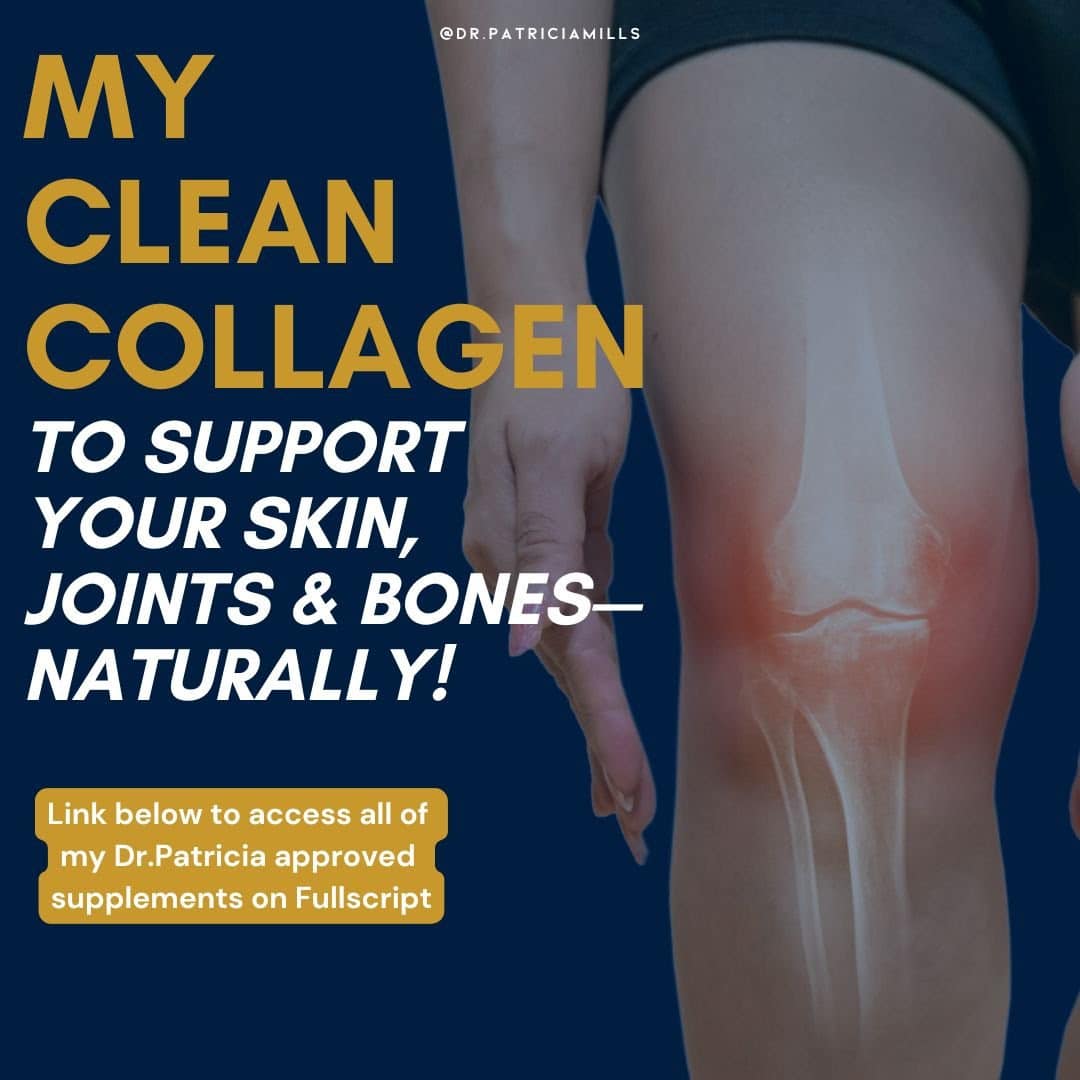
🔥You can find great quality collagen supplements in my easy-to-access Dr. Patricia Approved Fullscript protocol.
References
谭嘉文 & 谭国洪. (2014). Industrial processing technique of delicious, high-protein nutritional broth.
Alcock, R., Shaw, G., Tee, N., & Burke, L. (2019). Plasma Amino Acid Concentrations After the Ingestion of Dairy and Collagen Proteins, in Healthy Active Males. Frontiers in Nutrition, 6. https://doi.org/10.3389/fnut.2019.00163
Alcock, R., Shaw, G., & Burke, L. (2019). Bone Broth Unlikely to Provide Reliable Concentrations of Collagen Precursors Compared With Supplemental Sources of Collagen Used in Collagen Research. International Journal of Sport Nutrition and Exercise Metabolism, 29(3), 265–272. https://doi.org/10.1123/ijsnem.2018-0139
Voroshilin, R., Prosekov, A., & Kurbanova, M. (2021). Obtaining dry protein concentrates from secondary gelatin products. New Technologies. https://doi.org/10.47370/2072-0920-2021-17-2-15-24
Are you getting the full benefit of a Fullscript account?
If you haven’t already done so, set up your own Fullscript account so you can see my recommended core supplements, Protocols, and other favorites. And if you decide to purchase supplements which I’ve researched and recommend through Fullscript, I receive a small commission — and YOU receive a 10% discount! It’s a win/win.
Canadian residents
USA residents
>>> If you’re having trouble finding my list of Favorite Supplements, I hope this video helps you. <<<
If you’re still unable to see my recommended core supplements in your account, select the ‘Catalog’ tab, then click on ‘Dr. Patricia Mills’ Fullscript Account Favourites’ and then select ‘Foundational Supplements’.