Is Collagen Powder Really Worth It? Here’s What the Research Says
If you’re considering adding collagen to your routine, here’s what you need to know based on the latest research—and this in-depth video on whether collagen powder really works.
What You Need to Know About Collagen
Collagen supplements come from different sources, like pigs (porcine), cows (bovine), and fish (marine). They are sold in different forms such as protein powders, gelatin, hydrolyzed collagen, and collagen peptides. These products are often promoted to improve skin health, slow down skin aging, and help prevent joint pain.
Collagen is the most common protein in the body’s connective tissues, making up about 75% of the dry weight of your skin. As we age, the amount and quality of collagen in our skin and joints naturally decrease, which is linked to wrinkles and arthritis.
Collagen from animals can be taken from their connective tissues and turned into different forms. When collagen is heated, it changes into gelatin—a substance that has been used in food and traditional medicine for hundreds of years in places like Europe and China.
If you break down gelatin further using enzymes, you get collagen hydrolysates, also known as hydrolyzed collagen (HC). These are made up of smaller pieces called peptides. HC dissolves better in water, has a lower molecular weight than gelatin, which makes it better absorbed by the body, and does not gel at room temperature. This makes it easy to use in drinks and edible gels.
In the past ten years, collagen powder has become a popular health supplement, also known as a nutraceutical. The question is, does it really work, and is it safe?
What Collagen Powder Can Do for You
1. Improve Your Skin
If you’re looking for healthier, more youthful skin, collagen powder may help. Studies show that taking HC (especially type I and 3 collagen) in doses between 1.65–5 grams per day for 6 to 16 weeks can improve skin hydration, elasticity, and reduce wrinkles—especially in women over 35 (França et al., 2023; Žmitek et al., 2024; Chen et al., 2023; Campos et al., 2023; Lee et al., 2023). Taking vitamin C with the collagen may offer even better results!
It takes about 90 days of using HC supplement to see a delay in skin aging. After stopping supplementation, the benefits last for another four weeks.
2. Support Your Joints and Bones
Collagen also appears to help with joint pain and stiffness, and may support bone strength and density. While some studies report only modest improvements in osteoarthritis symptoms, others show enhanced joint mobility and comfort with daily doses of 2–10 grams, with best results seen after taking HC or type II collagen (the kind most prevalent in joints) for a minimum of 6 months (Von Hippel, 2021). This makes collagen especially useful as we age or for those managing joint issues.
3. Benefit Your Heart
Collagen supplements may also improve some cardiovascular risk factors. Research suggests it can help reduce body fat, lower LDL (“bad”) cholesterol, and decrease systolic blood pressure—three key markers for heart health.
4. Help Your Body Heal & Age Well
Some research points to collagen’s role in supporting wound healing, dental health, and even conditions like sarcopenia (age-related muscle loss) and rheumatoid arthritis. While more studies are needed, the results so far are promising.
How Hydrolyzed Collagen Works Inside Your Body
HC is broken down into smaller peptides, which makes it easier for the body to digest and absorb. Compared to regular collagen, it offers better nutritional value and more effective functional benefits.
Hydrolyzed collagen works in your skin in two important ways. First, it provides building blocks—called amino acids—that your body needs to make collagen and elastin, the proteins that keep your skin firm and elastic.
Second, small collagen pieces (called peptides) act like messengers. They attach to skin cells called fibroblasts and signal them to produce more collagen, elastin, and hyaluronic acid, which help keep skin smooth, plump, and hydrated.
Research shows that these collagen peptides can enter the bloodstream, accumulate in joint cartilage tissue, and stimulate chondrocytes—the cells responsible for maintaining cartilage—to produce components of the extracellular matrix. This helps support joint structure and function.
Therefore, collagen supplementation doesn’t just provide building blocks – it also increases the body’s ability to make its own collagen. When you take HC—especially before resistance exercise—it raises blood levels of glycine, proline, and hydroxyproline, key amino acids for collagen production (Skov et al., 2019; Lee et al., 2024; Nulty et al., 2024).
In fact, taking 15–30 grams of hydrolyzed collagen before a workout can significantly increase collagen synthesis markers in both men and women. This is especially helpful for women during the highest estrogen phase of their menstrual cycle (post-menses follicular phase to just before ovulation), when collagen production tends to drop. Supplementing can help offset that dip (Lee et al., 2024).
What About Plant-Based Options?
Unfortunately, collagen is not present in plants. Plant-based supplements for skin health that indirectly affect collagen stores in the body have been studied; there is much less research available to support the effects compared to animal-derived collagen. For example, extracts from purple glutinous rice (a specific variety of Oryza sativa L. cv. Pieisu 1 CMU) have been studied for their effects on the skin. Research shows that this type of purple rice is rich in anthocyanins—natural compounds that give it its color. These anthocyanins can help slow down the breakdown of collagen, which is important for keeping skin firm and youthful.
Is It Safe for Hormone Health?
For most people, collagen powder is considered safe and well-tolerated. Human studies using doses up to 10 grams per day for joint health and up to 5 grams per day for skin health report no serious side effects (Lee et al., 2023). Rare allergic reactions can occur, especially with mammalian sources, but these are uncommon.
That said, one study in rats found that extremely high doses might alter gut bacteria and metabolism (Mei et al., 2020). Don’t worry—these findings haven’t been seen in people taking normal supplement doses. However, keeping the dose within the 5-10 grams per day range with the optional 15 grams dosing around a resistance training workout is likely to keep us in the safe range.
Collagen supplementation also appears safe for hormone health. Research shows that HC does not significantly impact levels of key hormones like estrogen or testosterone, making it a safe choice for those concerned about hormonal balance. Additionally, it does not spike insulin levels (like protein powder does) and may even improve insulin sensitivity over time, which is beneficial for metabolic health (Zdzieblik et al., 2021).
Tips for Getting the Best Results
- Choose HC: This form is broken down for better absorption.
- Look for type I and III collagen for skin. HC or Type II collagen is best for joints.
- Pair it with vitamin C: Vitamin C helps your body use collagen more effectively.
- Take it before exercise: This can boost collagen production in your tendons and connective tissues.
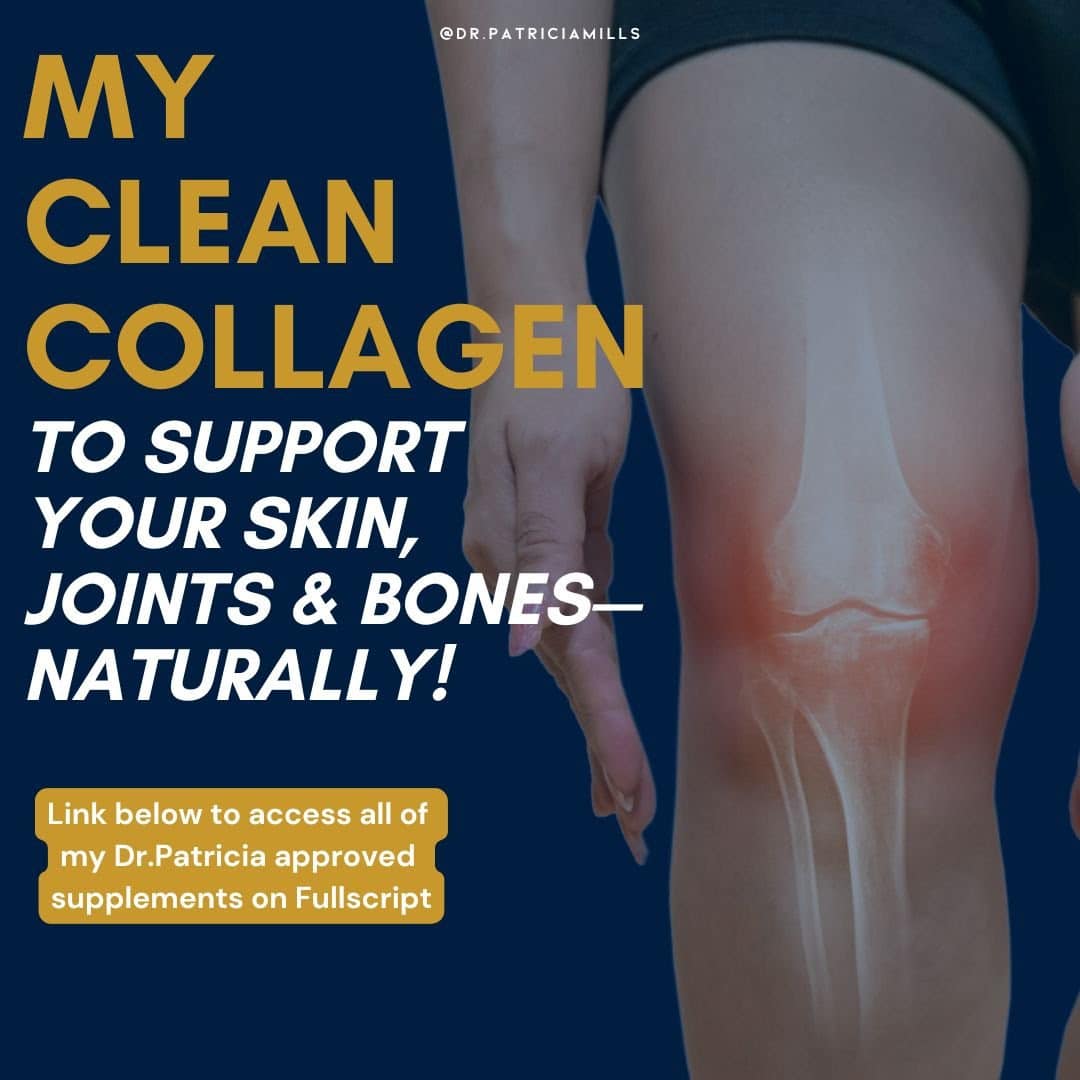
🛒You can find great quality collagen lowering supplements in my easy-to-access Dr.Patricia Approved Fullscript protocol.
Final Thoughts
If you’re hoping to improve your skin, support joint health, or enhance recovery from exercise, collagen powder may be a simple and effective option. It won’t negatively impact your hormone levels and it does help your body make more collagen—especially when combined with resistance training. And with few side effects at typical doses, it’s a supplement worth considering.
Additional Resources
I have created a video on this topic as part of my Wild Wisdom Show, watch HERE for a future review and to share the crucial knowledge with friends!
Are you getting the full benefit of a Fullscript account?
If you haven’t already done so, set up your own Fullscript account so you can see my recommended core supplements, Protocols, and other favorites. And if you decide to purchase supplements which I’ve researched and recommend through Fullscript, I receive a small commission — and YOU receive a 10% discount! It’s a win/win.
Canadian residents
USA residents
>>> If you’re having trouble finding my list of Favorite Supplements, I hope this video helps you. <<<
If you’re still unable to see my recommended core supplements in your account, select the ‘Catalog’ tab, then click on ‘Dr. Patricia Mills’ Fullscript Account Favourites’ and then select ‘Foundational Supplements’.
References
França, A., Santos, A., Morais, K., & Morais, G. (2023). Benefits of hydrolyzed collagen type 1 supplementation on skin health. Health and Society.
Žmitek, K., Žmitek, J., Hristov, H., Butina, M., Keršmanc, P., & Pogačnik, T. (2024). The effects of dietary supplementation with collagen and vitamin C and their combination with hyaluronic acid on skin density, texture and other parameters: A randomised, double-blind, placebo-controlled trial. Nutrients, 16.
Chen, L., Lv, Y., Xu, F., & Zhong, F. (2023). The effect of oral supplements containing collagen peptides rich in X-Hyp or X-Hyp-Gly compared with normal collagen hydrolysates on skin elasticity and collagen holes: A randomised double-blind clinical study. Food & Function.
Campos, L., De Almeida Pereira, A., & Cazarin, C. (2023). The collagen market and knowledge, attitudes, and practices of Brazilian consumers regarding collagen ingestion. Food Research International, 170, 112951.
Lee, M., Kim, E., Ahn, H., Son, S., & Lee, H. (2023). Oral intake of collagen peptide NS improves hydration, elasticity, desquamation, and wrinkling in human skin: A randomized, double-blinded, placebo-controlled study. Food & Function.
Von Hippel, P. (2021). Do collagen supplements reduce symptoms of osteoarthritis? Meta-analytic results do not support strong conclusions. International Orthopaedics.
Skov, K., Oxfeldt, M., Thøgersen, R., Hansen, M., & Bertram, H. (2019). Enzymatic hydrolysis of a collagen hydrolysate enhances postprandial absorption rate—A randomized controlled trial. Nutrients, 11.
Nulty, C., Tang, J., Dutton, J., Dunn, R., Fraser, W., Enright, K., Stewart, C., & Erskine, R. (2024). Data from unpublished source.
Mei, F., Duan, Z., Chen, M., Lu, J., Zhao, M., Li, L., Shen, X., Xia, G., & Chen, S. (2020). Effect of a high-collagen peptide diet on the gut microbiota and short-chain fatty acid metabolism. Journal of Functional Foods, 75, 104278.
Zdzieblik, D., Köhnke, A., Flechtner-Mors, M., & König, D. (2021). Collagen peptide supplementation in combination with resistance training improves body composition and insulin sensitivity in elderly men with sarcopenia: A randomized controlled trial. Nutrients, 13(7).