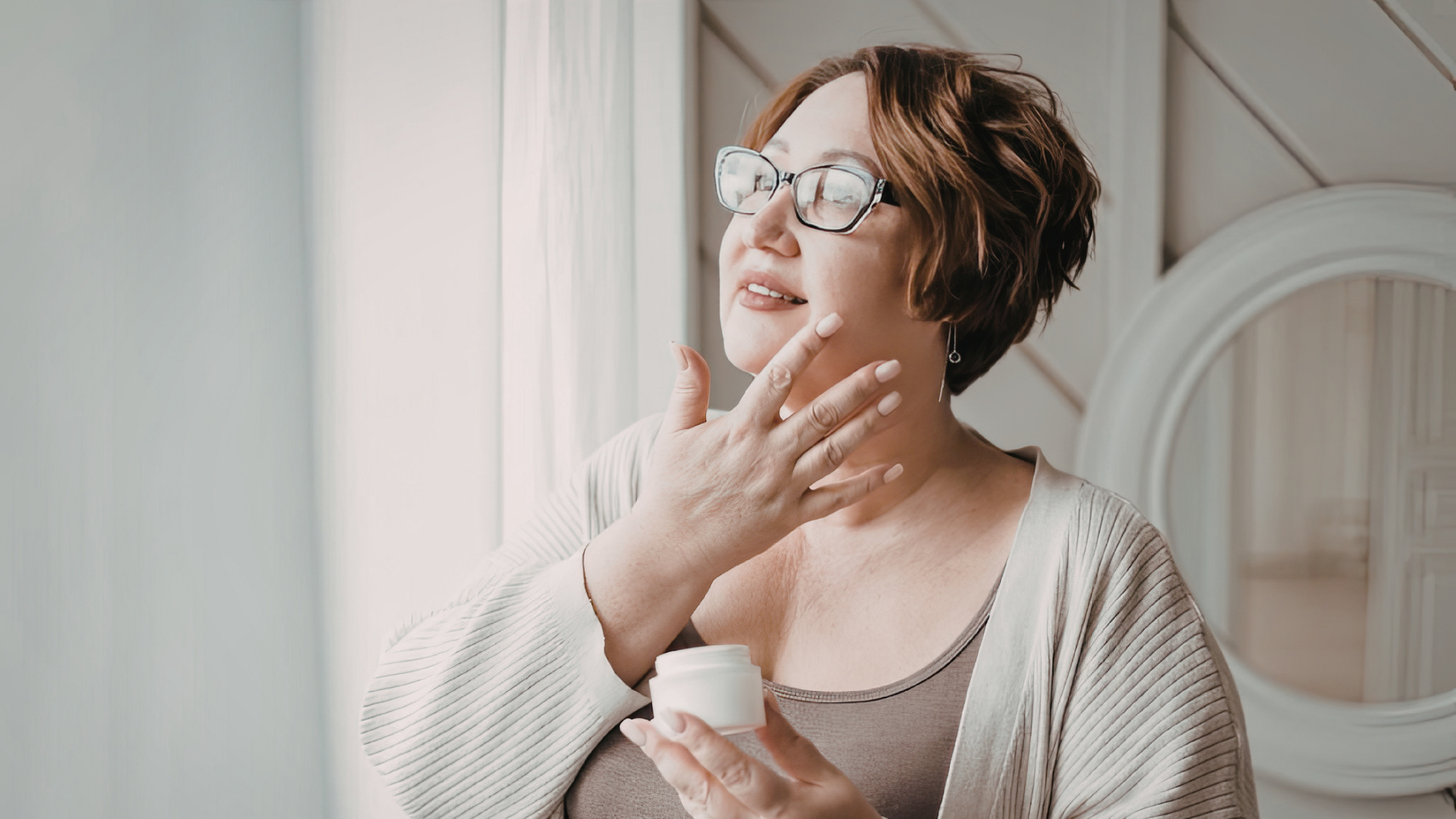
Your skin is not just a surface covering. It is a living, hormone-sensitive organ that constantly responds to what is happening inside your body. Hormones influence your skin’s thickness, hydration, collagen production, oil balance, elasticity, healing, and even how quickly it ages. As hormone levels shift with aging, menopause, chronic stress, and metabolic changes, your skin changes too (Böhm et al., 2025; Wilkinson & Hardman, 2021; Raine-Fenning et al., 2003).
This is one reason why many women notice sudden changes in their skin during perimenopause and menopause. Wrinkles may deepen, the skin can become thinner and drier, healing slows, and facial structure may begin to change more rapidly. Stress can further accelerate these changes by increasing cortisol, a hormone that breaks down collagen and weakens the skin barrier (Thornton, 2013; Hall & Hart, 2023).
Researchers now understand that skin aging is strongly connected to the endocrine system. Hormones do not simply affect the skin indirectly. Skin cells actually contain hormone receptors and can even produce certain hormones locally within the skin itself (Verdier-Sévrain et al., 2006; Kanda & Watanabe, 2005).
The Main Hormones Involved in Skin Aging
Estrogen
Estrogen is one of the most important hormones for healthy, youthful-looking skin. It supports:
- Collagen production
- Skin thickness
- Hydration
- Elasticity
- Blood flow
- Wound healing
- Skin barrier function
When estrogen levels decline during menopause, collagen levels fall rapidly. This contributes to thinner skin, wrinkles, dryness, sagging, and slower healing. Some studies suggest women may lose up to 30% of skin collagen within the first five years after menopause (Raine-Fenning et al., 2003; Lephart, 2018).
Estrogen also helps maintain hyaluronic acid and other molecules that keep the skin hydrated and plump. Lower estrogen can therefore lead to skin dryness, dullness, and reduced elasticity (Liu et al., 2019; Lephart, 2018).
Progesterone
Progesterone works together with estrogen to help maintain skin structure. Research suggests progesterone may:
- Support collagen preservation
- Stimulate skin cell renewal
- Help maintain skin thickness
- Reduce collagen breakdown
- Support healthy oil production
Some evidence suggests progesterone-containing menopausal therapies may improve skin aging markers, although more research is needed (Gasser et al., 2021; Kanda & Watanabe, 2005).
Testosterone and Androgens
Androgens include testosterone and dihydrotestosterone (DHT). These hormones influence:
- Sebum (oil) production
- Hair growth
- Skin texture
- Skin thickness
Balanced androgen levels help maintain skin structure, but imbalances may contribute to acne, unwanted hair growth, scalp hair thinning, and aging-related texture changes. Changes in testosterone and DHT may also affect facial aging and skin quality over time (Zouboulis & Makrantonaki, 2012; Makrantonaki et al., 2010; Rosset et al., 2025).
Cortisol (the Stress Hormone)
Cortisol is one of the most important hormones involved in stress-related skin aging. Chronic stress and elevated cortisol can accelerate visible aging by:
- Breaking down collagen
- Reducing fibroblast activity
- Increasing skin thinning
- Weakening the skin barrier
- Increasing water loss from the skin
- Slowing healing
Research shows that local cortisol activity in the skin increases with aging and sun exposure. Elevated cortisol is associated with poorer hydration, increased fragility, and faster skin aging (Hall & Hart, 2023; Tiganescu et al., 2013).
This helps explain why periods of chronic stress often show up visibly in the skin.
Growth Hormone and IGF-1
Growth hormone and insulin-like growth factor 1 (IGF-1) help stimulate skin repair and regeneration. They support:
- Fibroblast activity
- Collagen formation
- Tissue repair
- Elasticity
As these hormones decline with age, skin regeneration slows and structural support weakens (Böhm et al., 2025; Hussein et al., 2024).
Melatonin
Melatonin is best known as a sleep hormone, but it also acts as a powerful antioxidant within the skin. The skin can produce melatonin locally, where it helps protect against:
- Oxidative stress
- Inflammation
- UV-related damage
The skin has its own circadian rhythm and responds to melatonin via local receptors; poor sleep and circadian disruption impair barrier function, increase inflammation, and oxidative stress.
Researchers describe melatonin as a possible “aging neutralizer” because of its protective effects on skin cells (Bocheva et al., 2022). Therefore protecting sleep health is a key part of protecting skin health.
How Hormones Affect Skin Structure
|
Hormone |
Main Effects on Skin |
|
Estrogen |
Supports collagen, thickness, hydration, elasticity, healing |
|
Progesterone |
Helps preserve collagen and skin thickness |
|
Testosterone / DHT |
Influences oil production, texture, hair growth, skin structure |
|
Cortisol |
Breaks down collagen, weakens barrier, increases thinning |
|
Growth Hormone / IGF-1 |
Supports repair, regeneration, elasticity |
|
Melatonin |
Antioxidant protection, reduces oxidative stress |
Why Hormonal Changes Cause Visible Aging
Hormones act directly on skin cells including:
- Fibroblasts (collagen-producing cells)
- Keratinocytes
- Melanocytes
- Hair follicles
- Sebaceous glands
When hormone levels shift, several structural changes occur:
- Collagen and elastin break down
- Skin becomes thinner
- The dermal-epidermal junction flattens
- Hyaluronic acid declines
- Oxidative stress increases
- Matrix metalloproteinases (MMPs) increase and degrade collagen
- Water retention decreases
Over time, these changes contribute to:
- Wrinkles
- Sagging
- Dryness
- Fragility
- Uneven texture
- Slower healing
- Loss of facial fullness
(Lephart & Naftolin, 2022; Wilkinson & Hardman, 2021; Liu et al., 2019; Hussein et al., 2024).
Can Hormone-Based Therapies Help Skin Aging?
Some hormone-based therapies may improve skin quality, especially after menopause.
Research suggests estrogen therapy may improve:
- Collagen levels
- Skin thickness
- Hydration
- Elasticity
- Wrinkles
Topical estrogen and phytoestrogens (plant compounds with estrogen-like effects) are also being studied for skin aging benefits (Lephart, 2018; Thornton, 2013; Liu et al., 2019).
Progesterone may also support skin health, particularly when combined with estrogen. Topical progesterone alone has been shown to help minimize wrinkles and optimize skin health, although the evidence is still developing (Gasser et al., 2021).
Topical melatonin is being studied as an antioxidant, anti‑inflammatory, and anti‑aging ingredient for skin. Evidence is strongest for photoprotection (UV/sun, radiation therapy) and improving visible signs of aging; data on ideal dose are still limited and vary widely, anywhere from 0.1% to 10% concentrations. More research is needed to determine the optimal dose.
Supporting Healthy Skin from the Inside Out
Skin aging is influenced by far more than skincare products alone. Hormones, inflammation, stress, sleep, nutrition, metabolic health, and sun exposure all interact to shape how your skin ages.
Supporting healthy hormones and reducing chronic inflammation may help maintain healthier, more resilient skin over time. Key foundations include:
- Managing chronic stress
- Prioritizing sleep
- Eating a nutrient-dense anti-inflammatory diet
- Supporting blood sugar balance
- Protecting skin from excessive UV exposure
- Exercising regularly
- Avoiding smoking
- Addressing hormone imbalances when appropriate
Your skin is often a reflection of what is happening inside your body. Understanding the hormonal roots of skin aging can help you take a more whole-body approach to supporting healthy skin over time.
✨ Want to dive deeper into skin health? 🎥 Then continue your journey here:
Skin Health: Inside-Out & Outside-In Playlist

Fullscript Supplement Resources
You can find great quality maca supplements in my easy-to-access Fullscript plan that you can access right here:
References
Bocheva et al. Protective Role of Melatonin and Its Metabolites in Skin Aging. International Journal of Molecular Sciences. 2022.
Bocheva et al. Neuroendocrine Aspects of Skin Aging. International Journal of Molecular Sciences. 2019.
Böhm et al. Endocrine Controls of Skin Aging. Endocrine Reviews. 2025.
Brincat et al. Estrogens and the Skin. Climacteric. 2005.
Chae et al. AP Collagen Peptides Prevent Cortisol-Induced Decrease of Collagen Type I in Human Dermal Fibroblasts. International Journal of Molecular Sciences. 2021.
Gasser et al. Impact of Progesterone on Skin and Hair in Menopause: A Comprehensive Review. Climacteric. 2021.
Hall et al. Role of Corticosteroids in Skin Physiology and Therapeutic Potential of an 11β-HSD1 Inhibitor: A Review. International Journal of Dermatology. 2023.
Hussein et al. Influences on Skin and Intrinsic Aging: Biological, Environmental, and Therapeutic Insights. Journal of Cosmetic Dermatology. 2024.
Kanda et al. Regulatory Roles of Sex Hormones in Cutaneous Biology and Immunology. Journal of Dermatological Science. 2005.
Lephart et al. Factors Influencing Skin Aging and the Important Role of Estrogens and Selective Estrogen Receptor Modulators (SERMs). Clinical, Cosmetic and Investigational Dermatology. 2022.
Lephart et al. Menopause and the Skin: Old Favorites and New Innovations in Cosmeceuticals for Estrogen-Deficient Skin. Dermatology and Therapy. 2020.
Lephart. A Review of the Role of Estrogen in Dermal Aging and Facial Attractiveness in Women. Journal of Cosmetic Dermatology. 2018.
Liu et al. Recent Advances in the Anti-Aging Effects of Phytoestrogens on Collagen, Water Content, and Oxidative Stress. Phytotherapy Research. 2019.
Makrantonaki et al. Skin and Brain Age Together: The Role of Hormones in the Ageing Process. Experimental Gerontology. 2010.
Niculeț et al. Glucocorticoid-Induced Skin Atrophy: The Old and the New. Clinical, Cosmetic and Investigational Dermatology. 2020.
Raine-Fenning et al. Skin Aging and Menopause. American Journal of Clinical Dermatology. 2003.
Rosset et al. Hormonal Therapies in Cosmetic Dermatology: Mechanisms, Clinical Applications, and Future Perspectives. Cosmetics. 2025.
Thornton. Estrogens and Aging Skin. Dermato-Endocrinology. 2013.
Tiganescu et al. 11β-Hydroxysteroid Dehydrogenase Blockade Prevents Age-Induced Skin Structure and Function Defects. The Journal of Clinical Investigation. 2013.
Verdier-Sévrain et al. Biology of Estrogens in Skin: Implications for Skin Aging. Experimental Dermatology. 2006.
Viscomi et al. Managing Menopausal Skin Changes: A Narrative Review of Skin Quality Changes, Their Aesthetic Impact, and the Actual Role of Hormone Replacement Therapy in Improvement. Journal of Cosmetic Dermatology. 2025.
Wilkinson et al. A Role for Estrogen in Skin Ageing and Dermal Biomechanics. Mechanisms of Ageing and Development. 2021.
Xu et al. Ectoin Attenuates Cortisone-Induced Skin Issues by Suppression GR Signaling and the UVB-Induced Overexpression of 11β-HSD1. Journal of Cosmetic Dermatology. 2024.
Zouboulis et al. Hormonal Therapy of Intrinsic Aging. Rejuvenation Research. 2012.
Are you getting the full benefit of a Fullscript account?
If you haven’t already done so, set up your own Fullscript account so you can see my recommended core supplements, Protocols, and other favorites. And if you decide to purchase supplements which I’ve researched and recommend through Fullscript, I receive a small commission — and YOU receive a 10% discount! It’s a win/win.
Canadian residents
USA residents
If you’re still unable to see my recommended core supplements in your account, select the ‘Catalog’ tab, then click on ‘Dr. Patricia Mills’ Fullscript Account Favourites’ and then select ‘Foundational Supplements’.